
Tire Tanks (No Bottom)
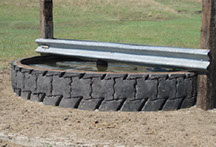
| 5' diameter (200 gallons) | $300 |
| 5.5' diameter (250 gallons) | $375 |
| 6' diameter (325 gallons) | $375 |
| 6.5' diameter (350 gallons) | $450 |
| 7' diameter (400 gallons) | $500 |
| 7.5' diameter (450 gallons) | $550 |
| 8' diameter (575 gallons) | $800 |
| 8.5' diameter (650 gallons) | $800 |
| 9' diameter (750 gallons) | $900 |
| 10' diameter (1000 gallons) | $1,200 |
| 11' diameter (1100 gallons) | $1,200 |
| 11.5' diameter (1250 gallons) | $1,200 |
| 12' diameter (1300 gallons) | $1,200 |
| 12.5' diameter (1300 gallons) | $1,300 |
| 13' diameter (1700 gallons) | $1,400 |
Ask about quantity discounts!
Sealing the Bottom
Steel Plates — Putting a steel plate bottom in a tire tank is a PERFECT way to seal the bottom and make the tire tank portable at the same time. The plates have a handy hook in the center for ease of movement.
Concrete — Call the Redi mix truck or mix your own Quikrete to pour in the bottom of the tank yourself. It takes about ½ yard for an 8’ tank and about a yard and a half for a 13’ tank.
Tanks with concrete bottoms are also available in many sizes with the concrete already poured in the center. Options for these tanks include, a 6 inch PVC riser pipe, cap with Apex float valve or a 10-12” PVC riser pipe in the center. Two to four lifting hooks and a drain hole and plug are also included.
Bentonite — Bentonite can be used as a temporary way to seal the bottom when it may be too cold to pour concrete or the tank is going to be moved after a short period of time.